
A small yearling black bear has been making itself at home in Creede, prompting local officials to set a trap and urge residents to be proactive.
This item is available in full to subscribers.
To continue reading, you will need to either log in to your subscriber account, below, or purchase a new subscription.
Please log in to continue |
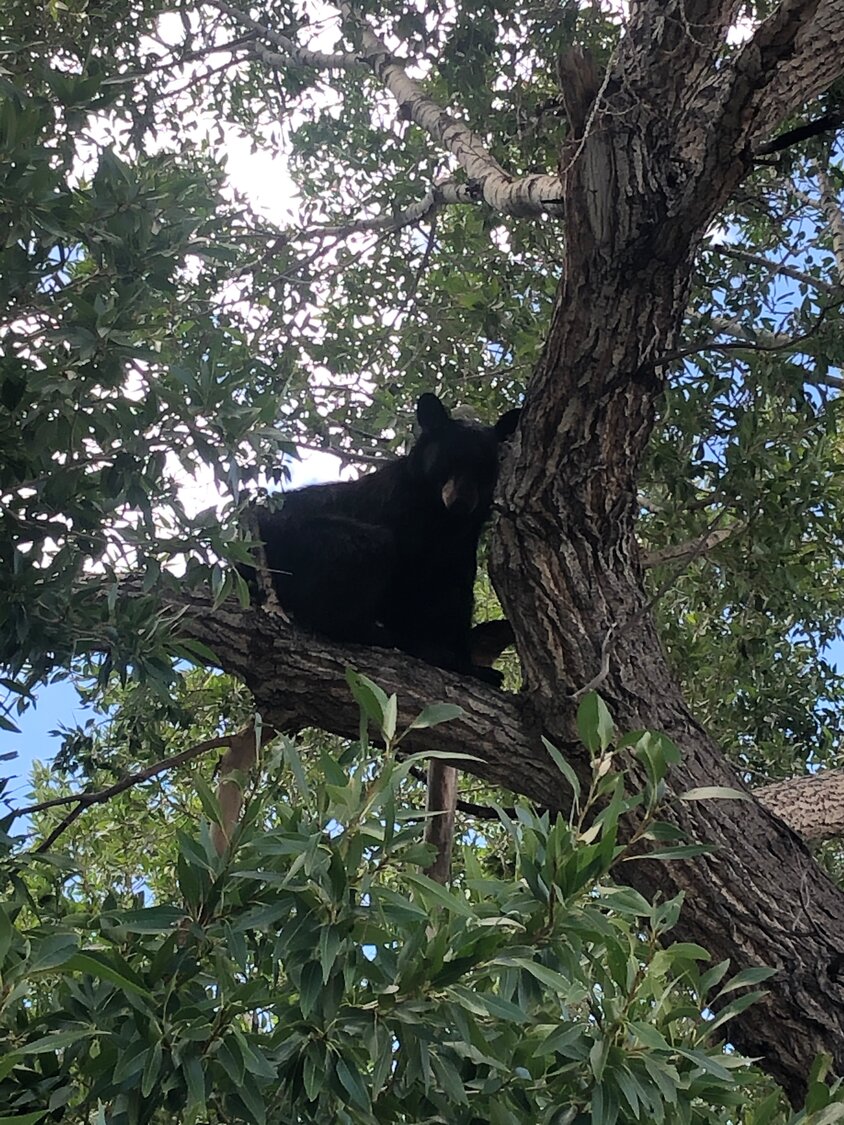
Yearling bear causes stir in Creede as drought drives wildlife into town
By LYNDSIE FERRELL
lferrell@alamosanews.com
CREEDE — A small yearling black bear has been making itself at home in Creede, prompting local officials to set a trap and urge residents to be proactive.
The bear, driven into town by warm temperatures and a shortage of natural food sources due to dry conditions, has become increasingly brazen. It has been spotted entering open doors around town, including the kitchen at Kip's Grill and the gym at the local recreation center.
"He’s more than willing to welcome himself in," Brent Woodward, Creede district wildlife manager with Colorado Parks and Wildlife, said during a recent interview. Because air conditioning is uncommon in Creede, many residents leave their doors propped open during the warm summer months, providing easy access for the wandering animal.
The bear's small size has led some residents to view it as cute, but Woodward warns against making the animal feel welcome. "Allowing this non-destructive but bold behavior to continue through the summer will result in a much larger, stronger and more problematic bear next year".
To deter the bear, residents are urged to haze it by hollering and making loud noises or spooking the animal away so it learns to avoid human spaces. "The point is to not make the bear feel welcome," Woodward said. "It’s the best we can do for it".
Efforts by the local sheriff's office to haze the bear have only been temporarily successful, with the animal often returning within a day and becoming more adept at avoiding authorities. The bear’s activity has also proven unpredictable, according to Woodward, who staked out the area for three to four hours without a sighting, only for the bear to return to town immediately after he went home.
The yearling is likely venturing into town during the day to avoid larger, more aggressive bears that dominate at night. It is still unclear whether the bear leaves town when human activity increases or simply hides in small, uncommon spaces.
This isn't the first time the region has faced a surge in bear activity. As previously reported, extreme drought and late spring frosts frequently destroy the natural plants bears rely on, forcing them into riparian corridors and towns like Creede and South Fork. Earlier this spring, unseasonably warm weather woke local bears from their winter slumber early. Wildlife managers warned at the time that pregnant sows in poor condition could delay reproduction or abandon their cubs to ensure their own survival.
"Bears are kind of masters of energy conservation," Woodward explained, noting that they will always seek out the easiest available calories.
Without significant rainfall to support fall crops, officials worry about the upcoming hibernation season. During similar severe drought conditions in 2002, some bears starved in their dens and reproduction plummeted.
If the trap currently set for the bear is successful, the animal's fate will depend on its health.
If the bear is underweight or in poor health, it will receive ear tags and may be evaluated by the Frisco Creek Wildlife Rehabilitation Center to recover its condition before release.
If the bear is healthy and appears to be in good condition, it will receive ear tags and be relocated and released in a different part of the valley.
However, officials estimate there is only about a 50% chance the bear will not return to town. Under current policy, a bear that has been tagged in both ears and requires handling again will be euthanized. The state's previous "three strikes" policy is no longer in use; it is now a two-strike limit.
While some concerned citizens have suggested feeding the bear in remote areas to keep it out of trouble, officials strictly prohibit this practice. Feeding wildlife teaches them to rely on human sources, establishing a habit that is incredibly difficult to undo.
Bear Aware Reminders
To prevent further conflicts and keep the bear from sticking around, officials are asking the community to practice strict "Bear Aware" habits:
A recent incident in South Fork saw a bear get trapped inside a vehicle, resulting in the complete destruction of the car's interior when the door shut behind it. Years ago in Creede, a bear that learned to open car doors had to be euthanized because the behavior could not be unlearned.
For now, the focus remains on keeping attractants to a minimum and encouraging the yearling to move on before it faces euthanasia.


